Do You Have Resting Rich Face

Apparently we can look at your face and determine if you are making a good living according to a recent story in New York Post. see below

Does your household earn a comfortable living? If so, you may have resting rich face.

A new study from the University of Toronto, published in the Journal of Personality and Social Psychology, found that people’s faces may reveal whether they’re rich or poor.

The study’s authors grouped subjects ages 18 to 22 into two groups — those with total family incomes under $60,000, and those with incomes above $100,000 — and had them pose for pictures without expressing any emotion. A separate group of subjects then looked at the photographed faces and determined whether they were poor or rich. They were able to guess correctly with roughly 53% accuracy, which is above random chance.

“Over time, your face comes to permanently reflect and reveal your experiences,” says study co-author Nicholas Rule. “Even when we think we’re not expressing something, relics of those emotions are still there.”

The results, which authors say were not affected by race or gender, were hard for the subjects to explain. “People are not really aware of what cues they are using when they make these judgments,” says study co-author Thora Bjornsdottir. “If you ask them why, they don’t know. They are not aware of how they are doing this.”

Of course, there are variables that this small study couldn’t account for: family incomes can change over the course of a subject’s childhood, and average income differs greatly from place to place. But study authors say that the results may provide more clues into poverty cycles and social classes.

Home Builders, Home Sellers Suddenly Shy

There is a new conversation going about hottest market in the US for housing. Sees reservations are kicking to sellers and developers. See full story realtor.com

By Jeffry Bartash | Jun 19, 2017

Steadily rising construction of new homes has given a jolt of adrenaline to the economy in the past several years, but a building slowdown raises questions about whether a key driver of U.S. growth has fallen into a ditch.

Sidetracked, perhaps. But certainly not down in the dumps.

The recent slide in construction is probably due to temporary headwinds that will soon ease. Home builders got a head start in 2017, for instance, because of an unusually warm winter that allowed them to do more work earlier in the year. Hence they don’t need to do as much in the spring.

Related Articles

Not all is fine and dandy, though.

Builders say it’s tougher now than it’s been in years to find skilled carpenters, electricians and other workers critical in the effort to put up new homes. That’s might also help explain the slowdown.

“Builders continue to express their frustration over an ongoing shortage of skilled labor and buildable lots that is impeding stronger growth in the single-family sector,” said Robert Dietz, chief economist of the National Association of Home Builders.

The higher cost lumber and other raw materials is another headache for builders.

For the most part, though, the wind is mostly at the back of builders. The economy is entering its ninth year of expansion. Unemployment is at a 16-year low. Wages are rising. Household wealth has recovered. Mortgages are more accessible. And millions of Americans who could not afford a home five years ago are now able to dream of owning one.

A pair of reports this week might tamp down unease about the health of the housing market.

Sales of previously owned homes are expected to remain near a 10-year high, although they might taper off in May.

The biggest problem: Not enough people actually want to sell their homes even with demand near the highest level in years.

It’s not just home owners who don’t want to sell. Investors who bought homes on the cheap during the Great Recession and immediate aftermath might be waiting for prices to rise higher still before they sell, the National Association of Realtors contends.

“The lack of inventory of homes for sale is one of the most pressing challenges in the housing market today,” said Mark Fleming, chief economist at First American.

The lack of homes for sale is also largely behind a surge in rents and home prices in the past few years that only recently has tapered off. Prices are unlikely to fall much further, though, unless builders ramp up construction.

Sales of newly built homes in May won’t offer much proof of that. While they are forecast to rebound from a small dip in April and hover near a nine-year peak, sales can only rise as fast as builders complete new homes.

Related topics: constructionhome buildershome buildingMarketWatch

Real estate Tech files To Go Public

Redfin files for IPO in search of new home on Nasdaq

Image Credit: Redfin

Harness AI or die. See how Airbnb, Coca Cola, IBM, eBay, Kayak, Pandora, and the NYT are using AI to increase ROI at MB 2017. Tickets here!


Redfin, an online brokerage for the residential real estate market, filed to go public late Friday. Redfin plans to list its shares on Nasdaq under the ticker RDFN. Redfin’s filing said it plans to raise $100 million, although this figure is often included as a placeholder ahead of a roadshow.

advertisement

The company’s online agents use its technology to offer commissions it says are well below traditional brokerages. In a letter to shareholders included in the prospectus, Redfin described itself as “rabid squirrels on a mission to make real estate better, and to treat everyone we work with along the way respectfully.”

The Seattle-based company said its revenue grew 44 percent year over year to $59.9 million in the first quarter of 2017 and posted a net loss of $28 million, against a net loss of $24.4 million in the year ago period. Last year, the company saw revenue grow by 43 percent to $267 million and its net loss decrease to $22.5 million from $30.2 million in 2015.

The company said its cash flow last quarter was a negative $22 million and that it had $38 million in cash on hand as of March 31.

The prospectus included a disclosure that the company began testing last quarter an “experimental” service called Redfin Now, in which Redfin buys homes directly from sellers and resells them to buyers. “Customers who sell through Redfin Now will typically get less money for their home than they would listing their home with a real estate agent, but get that money faster with less risk and fuss,” the filing said.

Redfin says it has no specific plans for the IPO proceeds, but plans to keep the money in short-term investments for use in general corporate purposes, including technology and marketing. Goldman Sachs and Allen & Co. are listed as lead underwriters of the offering.

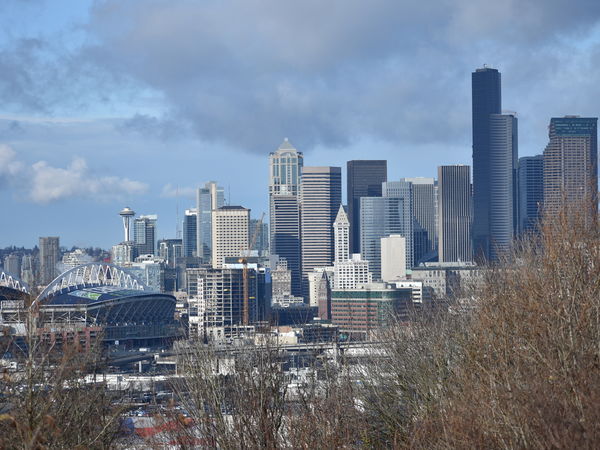
Seattle Population Exceeds 700,000 For First Time, According To US Census

if you want to know why the waits are longer and traffic is worse then according to a recent Patch report We are 3/4 of million people now. See full story

Seattle and other Puget Sound cities have hit major population milestones, according to data released Thursday by the U.S. Census Bureau.


Seattle Population Exceeds 700,000 For First Time, According To US Census

SEATTLE, WA – Seattle crossed a major milestone last year: for the first time ever, the city’s population exceeded 700,000. According to data released by the U.S. Census Bureau Thursday, Seattle now has approximately 704,000 residents. In the year ending July 1, 2016, Seattle added more than 20,000 residents, which is the fastest rate of growth in the U.S.

Overall, Seattle was No. 5 on a list of the largest 15 cities for total population added between July 1 2015 and July 1 2016. Seattle still remains the 18th largest city in the U.S., behind Charlotte, N.C., and its 842,000 residents.

What’s amazing about the 700,000 number is how quickly it happened.

Seattle only crossed the 600,000 population threshold around 2010. In the 2000 census, the population of Seattle was measured at about 560,000. Between 1980 and 2000 – a span of 20 years – Seattle added about 173,000 residents.

In other words, it took Seattle just six years to add about half the number of residents that the city added between 1980 and 2010. Seattle now has more residents than Detroit (713,000), which once had a population close to 2 million at its peak in the 1950s.

Seattle wasn’t the only Puget Sound city that grew. Renton surpassed 100,000 residents for the first time ever, and Eastside cities like Bellevue and Issaquah experienced tremendous growth. Here’s a look at how other cities around the region grew between 2015 and 2016:

City 2015 Estimate 2016 Estimate Increase
Bellevue 134,630 141,400 5%
Renton 97,234 100,953 3.8%
Tacoma 203,481 211,277 3.8%
Everett 105,685 109,043 3.1%
Shoreline 54,774 55,333 1%
Puyallup 38,720 40,640 4.9%
Lakewood 59,122 60,665 2.6%
Issaquah 33,682 37,322 10.8%

Image Patch.com file photo

Former VP Training Local Leaders

Former Vice President Al Gore and Climate Reality group train 800 leaders

More than 11 years ago, “An Inconvenient Truth” debuted, featuring a slide show former Vice President Al Gore put together detailing the dangers the world faced from climate change.

Glacial melt, increased extreme weather events and widespread drought were just a few of the effects of an increasing global temperature assisted by man-made pollutants.

On Tuesday, Gore came to Bellevue and presented his followup presentation to more than 800 climate change leaders at the “Climate Reality” training in Downtown’s Meydenbauer Center.

“We need to ask ourselves three questions: One, do we need to change? Two, can we change? Three, will we change?” Gore asked. “The answer to all three questions is yes, for the record.”

The Climate Reality Project was founded by Gore in 2011, and seeks to train leaders who can take information and advocacy back to their communities all over the world. Bellevue hosted the 35th Leadership Corps training for Climate Reality June 27-29. Much of Gore’s topics focused on major issues in the state of Washington.

After a prayer from the great-great-great-great-grandson of Chief Seattle, Ken Workman, several speakers reinforced the importance of their cause.

“We want you to go out and speak knowledgeably about climate change and organize around climate change,” said Ken Berlin, president and CEO of Climate Reality. “We have to minimize damage from this administration. We can’t afford to have a four-year gap in our efforts.”

Much like in his slide show in an “Inconvenient Truth,” the former vice president pointed to piles of scientific studies to back his and the vast majority of the scientific community’s arguments about anthropogenic climate change, citing the increasing frequency of extreme weather events and the scarcity and humanitarian issues they are poised to cause as good catalysts to enact change.

If the human race continues its current output of adding 110 million tons per day of carbon into the atmosphere, mid-range projections have the planet’s average temperature rising by 5.8 percent by 2050.

Gore pointed to massive flooding in Carnation, Stanwood and the tragic Oso landslide as “freak” events happening more and more often as the

Website Powered by WordPress.com.

Up ↑